
Buying rugs online in the UK goes well when you settle a few things before you start browsing: the size your room needs, the material that suits how the room is used, and how much cleaning you’re prepared to do. Get those right and colour and pattern become the fun part rather than a gamble. It also pays to read the delivery and returns terms before you order, because rugs are bulky to send back.
How do I measure for a rug?
Measure the floor area you want the rug to anchor, not the whole room. Then mark the outline on the floor with masking tape or a few sheets of newspaper and live with it for a day or two. You’ll soon see whether it feels too small or gets in the way of a door.
Rules of thumb that work in most UK homes:
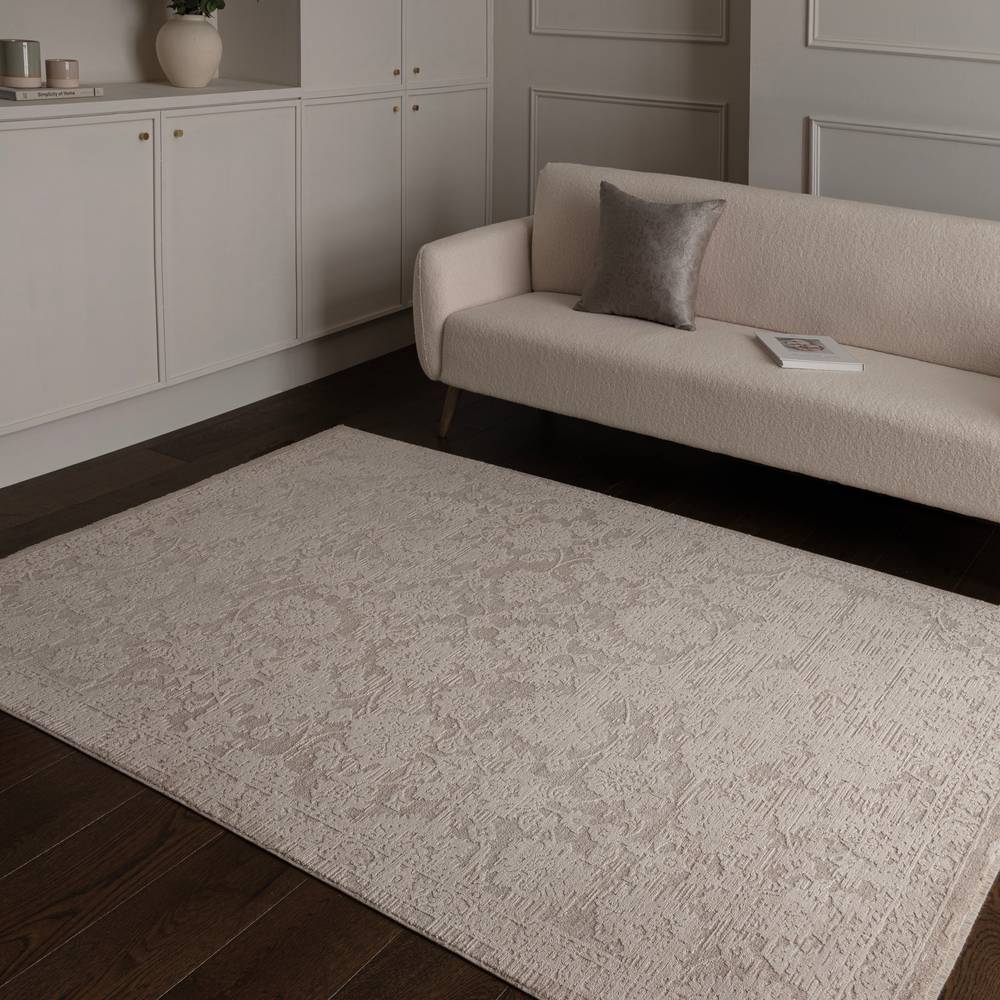
- Living room: the front legs of the sofa and any armchairs should sit on the rug. A rug that only fills the gap in front of the sofa tends to look as if it has drifted there.
- Bedroom: let the rug run under the lower part of the bed and extend about 38cm (15 inches) beyond it, so your feet land on something soft in the morning.
- Dining room: allow at least 60cm beyond the table on every side, so the chair legs stay on the rug when someone pushes back to stand up.
- Hallway: leave a strip of floor showing along each side of a runner, and check the door swing before you order.
- Doors: measure the gap under any internal door. A thick rug can catch a door that opens over it.
In a larger living room, leave about 45cm of bare floor between the rug and the walls. That frame of floor is what makes a rug look intentional. For a fuller walk-through of layouts, read our guide on what size rug for a living room.
Which rug sizes do we stock?
Most of our rugs come in a handful of standard sizes, and you can filter the range by size group from X-Small to X-Large. This is where each common size usually works.
| Size | Typical use |
|---|---|
| 60 x 120cm | Doorways, a small spot beside a chair |
| 80 x 150cm | Beside a bed, in front of a fireplace, a small entrance |
| 120 x 170cm | Small living room with a two-seater, reading corner, child’s bedroom |
| 160 x 230cm | Most living rooms with a three-seater, under a double bed |
| 200 x 290cm | Larger lounges, open-plan seating areas, king-size beds |
| 200 x 300cm | Big open-plan rooms, dining tables for six |
| 240 x 340cm | Very large lounges and open-plan spaces |
| Runners (for example 68 x 240cm or 68 x 300cm) | Hallways, landings, along a kitchen run |
If you’re caught between two sizes, go larger. A rug that’s slightly too big rarely looks wrong. One that’s too small nearly always does, because it breaks the room into islands.
Which rug shape should I choose?
Most rooms are rectangular, so most rooms suit a rectangular rug. Furniture lines up neatly against straight edges, and it’s by far the biggest part of our range. Start there unless you have a clear reason not to.
- Runner rugs fill long, narrow spaces: hallways, landings and the strip of floor between kitchen units and an island.
- Round rugs work under a round dining table or in a corner with a single chair, where a rectangle would fight the curve.
- Square rugs suit square rooms and square tables, but they can look odd in a long through-lounge.
Match the shape to the main piece of furniture the rug sits under and the room usually looks right.
Which rug material suits which room?
It depends on footfall, spills and how soft you want it underfoot. In general terms, the common fibres compare like this.
| Material | What it’s like | Good for |
|---|---|---|
| Wool | Natural, springy and warm; resists crushing and hides everyday dirt well | Living rooms, bedrooms, anywhere you want a rug to last |
| Polypropylene | Synthetic and tough, resists stains, usually kind on the budget | Busy family rooms, hallways, dining rooms, homes with pets |
| Polyester | Synthetic and soft, takes colour well, often used for shaggy and high-shine styles | Bedrooms and quieter living rooms |
| Jute and sisal | Textured and earthy, firm underfoot, can mark if they get wet | Dry living areas, layering under a softer rug |
| Viscose | Silky with a soft sheen, but delicate: marks and flattens more easily and doesn’t like water | Low-traffic spaces such as a bedroom or formal lounge |
If you want something that ages well, wool rugs are a strong all-rounder. For a hard-working family room, polypropylene and our durable rugs are the practical choice. High-shine rugs catch the light nicely, but keep them away from the back door. For patios, conservatories and utility rooms, indoor-outdoor rugs are made to cope with damp and muddy feet.
Every rug is different, so check the product page for what that particular rug is made from.
Does pile height matter?
Yes. It changes how a rug feels, how easily it cleans and where it will work. Short pile is practical; long pile is cosy.
- Low or flat pile (roughly under 1cm): easy to vacuum, sits flat under doors, and chairs slide over it. Good for dining rooms, hallways and kitchens.
- Medium pile (around 1cm to 2cm): the middle ground for living rooms. Soft enough to sit on, firm enough not to flatten under a coffee table.
- High pile or shaggy (over 2cm): soft and warm, and lovely by a bed. It hangs on to crumbs and pet hair, though, and dining chairs will catch in it.
If a door has to open over the rug, measure the gap underneath first and choose a pile that fits, with a little extra for any underlay.
Are washable rugs worth it?
In kitchens, hallways, nurseries and homes with pets, often yes. Being able to properly wash out a spill or a muddy paw print, rather than dabbing at it, keeps a rug looking fresh for longer.
Our washable rugs include the Super Snug Washable range, which comes in a soft sage green that sits well with natural wood and white walls. Follow the care label on the specific rug for washing temperature and drying, and check it will actually fit your machine before you try. For other low-fuss options, look at the easy clean rugs.
What rug works with pets and children?
A low to medium pile, a tough synthetic or wool, and a pattern that hides everyday marks. Those choices do more to keep a family rug looking good than anything else.
- Loops and claws don’t mix. Cats and dogs can snag a looped pile, so a cut pile is safer.
- Patterns forgive. A geometric or abstract design hides a juice spill far better than a plain pale rug.
- Mid tones are easiest. Very light rugs show mud and very dark ones show pet hair and dust. Greys, greige, muted blues and soft greens sit in the forgiving middle.
- A washable rug in a playroom or under a high chair saves a lot of stress.
Do I need a rug pad or underlay?
We’d recommend one. On a hard floor it stops the rug sliding, which matters on landings and in homes with toddlers or older relatives, and it adds a bit of cushioning. On carpet, it can stop a rug creeping across the room over time.
- Cut the pad a couple of centimetres in from each edge so it doesn’t show.
- If you have underfloor heating or a particular floor finish, check the pad is suitable for it.
- Thin pads suit doorways; thicker ones give a softer feel in a bedroom.
How do I choose colour and pattern?
Choose the rug after the sofa and walls, not before, and take one colour from what’s already in the room. A rug that picks up a cushion colour or the tone of a curtain ties the room together without trying too hard.
- Small or dark rooms: a lighter rug lifts the floor and bounces light back up.
- Busy rooms: a plain rug gives the eye somewhere to rest if your curtains or wallpaper are patterned.
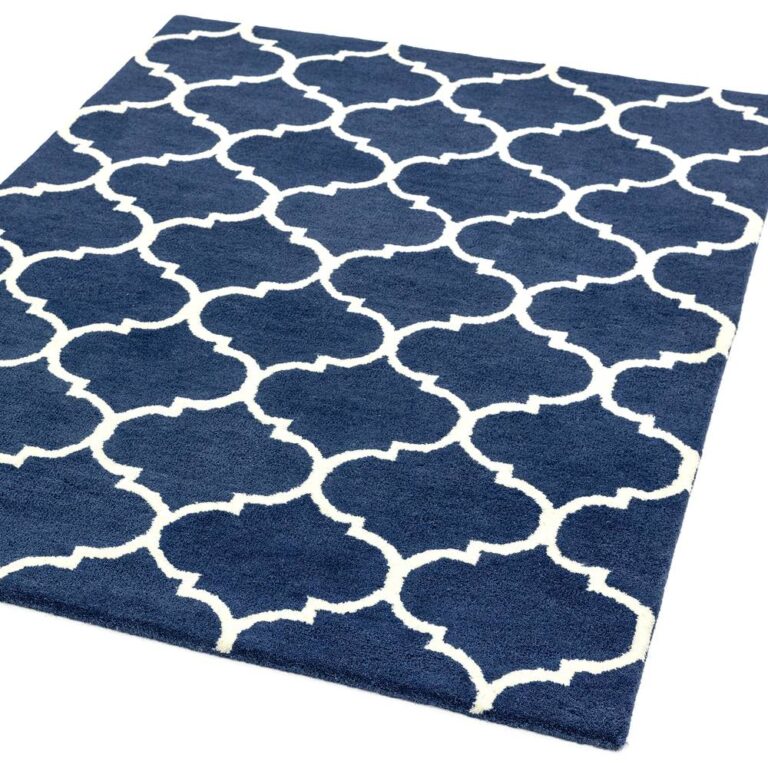
- Plain rooms: a pattern adds interest. Boho designs feel relaxed; Persian designs feel traditional.
- Two-tone: black and cream works with grey sofas, oak floors and white walls, in modern and period homes alike. Our guide to black and cream rugs has seven ways to style one.
- Hand made pieces have the small irregularities that give a rug character.
Pattern scale matters too. A large pattern suits a large room. In a small room, keep it smaller or quieter so the floor doesn’t take over.
How can I judge a rug’s colour online?
Screens vary, so treat the photo as a guide and read the colour description on the product page as well.
- Look at every photo, especially room shots, which show the rug in more natural light.
- Compare it with something you own. If a rug is described as ochre or teal, find something in the house you’d call the same colour.
- Check the colour on a laptop as well as your phone.
Our free samples are for curtain and blind fabrics, not rugs. If you’re local, the best way to see a rug’s true colour and feel is to visit our showroom at 58-68 Green Lane Road, Leicester LE5 3TH. We’re open Monday to Friday 9am to 5.30pm and Saturday 11am to 5.30pm. Bring a cushion cover or a paint card and hold it against the rugs you like.
How do delivery and returns work when buying rugs online in the UK?
Rug delivery is a flat £15 per order to mainland UK, and rugs usually arrive in 5 to 9 working days. Offshore and remote areas (Northern Ireland, the Scottish Highlands and Islands, the Isle of Man, the Isle of Wight and the Channel Islands) are £35. Plan around that if you want the rug down before guests arrive or before a house move. If you order a rug alongside made to measure curtains or blinds, there are two delivery charges and the items may arrive separately.
Check the rug when it arrives. Any damage or defect needs reporting within 7 days of delivery, with photos.
If you change your mind, you can ask to return a rug within 7 days of delivery. It has to be unused and repackaged, and there’s a £30 processing fee plus the cost of return delivery; the original delivery charge isn’t refunded. If a rug is faulty, those fees are waived and we’ll replace or refund it. The full details are on our delivery page and in our returns policy. If anything about a rug is unclear, ring us on 0116 251 1470 or contact us before you buy. It’s always easier to sort out beforehand.
When it arrives, unroll the rug and let it settle flat for a day or two. Creases from rolling usually relax on their own, and rolling it the other way for a short while speeds things up.
How do I look after a new rug?
Vacuum regularly, deal with spills straight away and turn the rug now and then so it wears evenly. That covers most of it.
- Vacuuming: once or twice a week in a busy room, using suction only or a flat nozzle. Don’t use a beater bar.
- Spills: blot, don’t rub. Work from the outside of the mark inwards so it doesn’t spread.
- Shedding: new wool rugs often shed a little at first. It eases off with regular vacuuming.
- Rotation: turn the rug 180 degrees every few months so sun and footfall spread evenly.
- Deep cleaning: wool and viscose rugs benefit from a professional clean every 12 to 18 months. Avoid steam cleaning, and never machine wash a rug unless the label says you can.
- Sunlight: strong sun through a south-facing window can fade colours over time. Blinds or curtains protect the rug as well as the room.
Our rug care guide goes into more detail, including viscose and natural fibres.
Quick answers
What size rug do I need for a living room in the UK?
For most living rooms with a three-seater sofa, 160 x 230cm works well. Larger lounges and open-plan rooms usually need 200 x 290cm or 200 x 300cm.
What is the most hard-wearing rug material?
Wool and polypropylene both handle heavy use well. Polypropylene is easier to clean; wool is softer and ages better.
Are washable rugs good for pets?
Yes. You can deal with muddy paws and accidents properly, and the Super Snug Washable range is a good place to start.
Can I get rug samples?
Our free samples are for curtain and blind fabrics. For rugs, visit the Leicester showroom to see colours and textures in person.
Can I return a rug I’ve bought online?
Yes, if you ask within 7 days of delivery and the rug is unused and repackaged. A £30 processing fee and return delivery costs apply, unless the rug is faulty.
Find your rug
Start with the size you’ve measured, then narrow it down by material and style. Browse all rugs, with over 1,000 designs to choose from, or come and see them in person at our Leicester showroom. We’re rated 4.8 on Google, and we’re happy to help you choose.