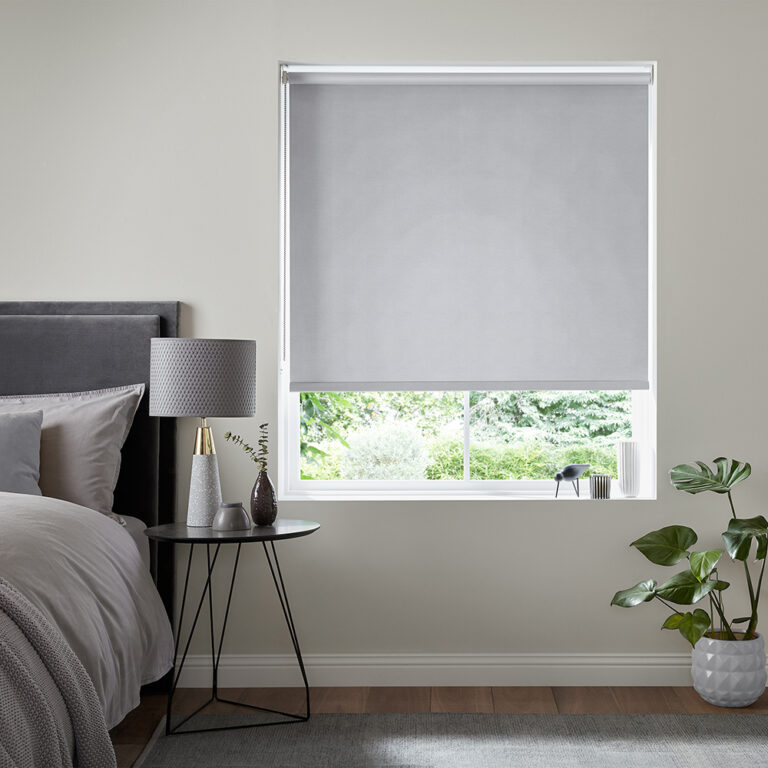


How to measure for blinds, in short: first decide whether the blind will sit inside the window recess or outside it. For a recess fit, measure the width and the drop in three places each and give us the smallest of each. For an exact (outside) fit, measure the area you want to cover and allow at least 100mm of overlap on each side. Use a metal tape measure and write everything down in millimetres.
That’s the short version. Below is the full process we’d talk you through in the showroom, plus the mistakes that most often lead to a blind that doesn’t fit.
What do I need before I start?
A metal tape measure, a pencil and something to write on. Don’t use a fabric or sewing tape. They stretch, and over a wide window they can be out by more than a centimetre.
Work in millimetres, not centimetres or inches. It’s the unit on our order form and it stops rounding errors creeping in. A second pair of hands helps on wide windows, and you’ll want a step ladder if the top of the recess is above head height. Measure every window separately, even if they look identical. Windows in the same house are often a few millimetres apart, and in a recess that’s enough to matter.
Which fit should I choose before I measure for blinds?
Go for a recess fit if the window has a reasonably deep, square recess and you like a neat, built-in look. Go for an exact (outside) fit if the recess is shallow, out of square or blocked by handles, or if you want to keep out as much light as possible.
| Recess fit | Exact (outside) fit | |
|---|---|---|
| Where it sits | Inside the window reveal | On the wall or frame, over the window |
| Look | Neat and tailored, sill stays clear | Makes the window look larger |
| Light at the edges | Small gap down each side | Overlap cuts down light leak |
| Best for | Deep, square recesses | Shallow or uneven recesses, bedrooms, protruding handles |
| What you measure | The recess itself | The area to cover, plus at least 100mm overlap each side |
| Width deduction | We make the blind about 10mm narrower than the recess | None: the blind is made to the size you give |
How do I measure for a recess fit?
These steps are for a blind that sits inside the window reveal.
- Measure the width in three places. Measure across the recess at the top, the middle and the bottom, from one side of the reveal to the other. Write all three down.
- Give the smallest width. Recesses are rarely square. Order from the widest figure and the blind can catch on the sides where the recess narrows.
- Measure the drop in three places. Measure from the top of the recess to the sill on the left, in the centre and on the right, and give the smallest. If you’re measuring down to the sill, take 10mm off so the blind can move freely.
- Check the depth. Measure from the window frame to the front edge of the recess. The brackets and the rolled or folded blind need room to sit without hitting the glass or the handles. If the recess is shallow, check the product page or ask us before you order.
- Don’t take anything off the width. Give us the exact recess width. We make recess blinds about 10mm narrower than the recess so they clear the sides.
- Look for obstructions. Window handles, tiles, curtain tracks fitted inside the reveal and window restrictors can all get in the way of a blind. Note anything that sticks out.
The classic mistake is knocking a centimetre or two off the width yourself and then having the 10mm clearance taken off as well. The blind arrives too narrow, with gaps down both sides. Measure exactly and let the deduction happen once.
How do I measure for an exact (outside) fit?
With an exact fit, you’re deciding the finished size of the blind, so your measurements are the size you want it to be.
- Measure the width you want to cover. Measure the window opening or recess, then add at least 100mm on each side. More is fine if blocking light is the priority.
- Decide where the top will sit. Brackets usually go on the wall above the recess or frame. If there’s room, allow at least 100mm above the window. Mark the height in pencil and measure the drop from there.
- Decide where the bottom will finish. Aim for at least 100mm below the window if space allows, or stop at the sill if it sticks out. Measure from your top mark to that point.
- Measure in three places. Even on an exact fit, take three widths and three drops and give the smallest. It catches any sloping walls or sills.
- Check the wall above. Make sure there’s solid wall to fix into, with no coving, curtain pole or socket where the brackets need to go.
- Watch for radiators and deep sills. If the blind hangs down past the sill, make sure it won’t sit on a radiator or catch on a sill that projects.
No deduction is taken on an exact fit. The blind is made to the width and drop you give us.
How do I measure a bay window?
Treat each window in the bay as its own blind, and order bay blinds as exact size. Measure each section’s width and drop separately, from where you want the blind to start to the sill or floor, then check that neighbouring blinds won’t clash at the corners when they’re lowered. The corners are where bay blinds usually go wrong, so if you’re unsure, contact us before ordering. Our full blind measuring guide covers bays step by step.
What about no-drill blinds?
No-drill blinds are recess fit only. They sit inside the window recess without drilling, and the frame or recess they fix to has to be solid, so plasterboard with nothing behind it won’t do. Measure carefully, and follow the instructions on the product page for the no-drill blind you’ve chosen, as they’re specific to that system.
Does the measuring differ for roman and roller blinds?
The basic process is the same, but there are two things to know.
A roman blind keeps a stack of folded fabric at the top when it’s raised. In a recess, that stack covers part of the glass. If you want more daylight, an exact fit set above the window lets the stack sit mostly on the wall.
On a roller blind, the brackets and control sit at the ends of the roll, so the fabric is a little narrower than the overall blind. For a recess fit, just give us the recess size. For an exact fit, give the overall size you want and we can tell you how the fabric width compares. If you’re still choosing between the two, our roman blinds vs roller blinds guide sets out the differences.
Common measuring mistakes
- Using a fabric tape instead of a metal one.
- Measuring once and assuming the recess is square.
- Taking your own allowance off the width on a recess fit.
- Mixing up width and drop. Always measure and write down width first.
- Writing in centimetres or inches when the form asks for millimetres.
- Forgetting the window handle, which can stop a blind hanging flat.
Quick answers
Do I measure width or drop first?
Width first, then drop. Getting them the wrong way round is one of the easiest ways to end up with the wrong size.
Should I take anything off for a recess blind?
Not off the width. Give us the smallest of your three recess widths and we make the blind about 10mm narrower. If your drop goes down to the sill, take 10mm off that.
How much overlap should an exact fit blind have?
At least 100mm on each side, and ideally 100mm above and below the window if there’s room. In a bedroom, more overlap means a darker room. See our guide to blackout blinds for bedrooms.
Can I get help with fitting?
Yes. We offer a local installation service for curtains and blinds, so ask us when you order. If you’d rather do it yourself, our blind fitting guide takes you through it.
Ready to order?
Once you have your measurements, browse all our made to measure blinds or go straight to roman, roller or no-drill. Order up to 5 free fabric samples first, because made to measure blinds can’t be returned for a change of mind once production starts. If anything about your window is unusual, call us on 0116 251 1470 before you place the order.