
Roman blinds vs roller blinds comes down to look and practicality. Choose a roman blind if you want a soft, fabric-led window that feels like a small curtain. Choose a roller blind if you want something slim and practical that rolls almost out of sight. Both can be made to measure and both come in blackout, so the right one usually depends on the room, the window and how often you open and close it.
What is the difference between a roman blind and a roller blind?
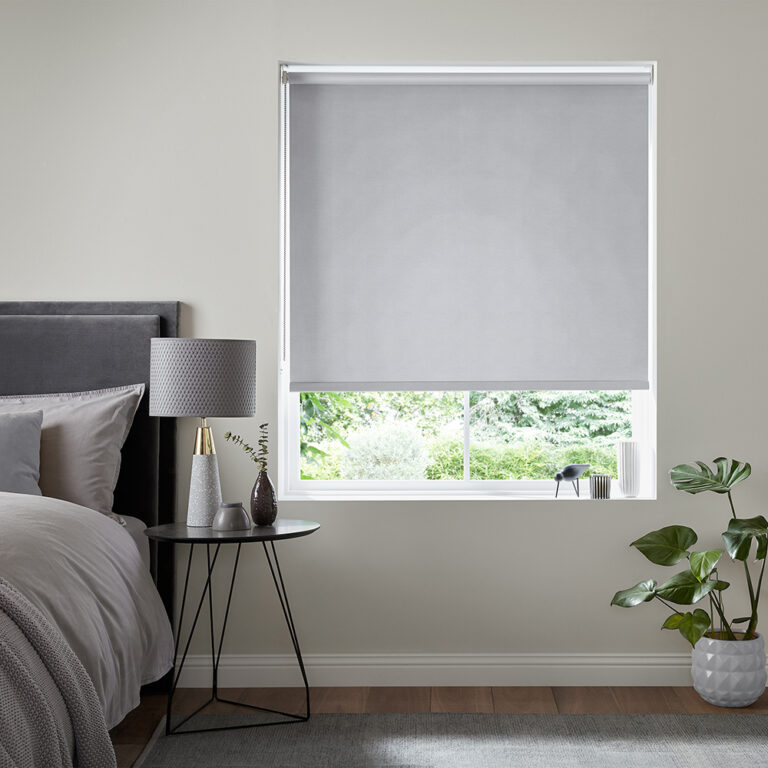
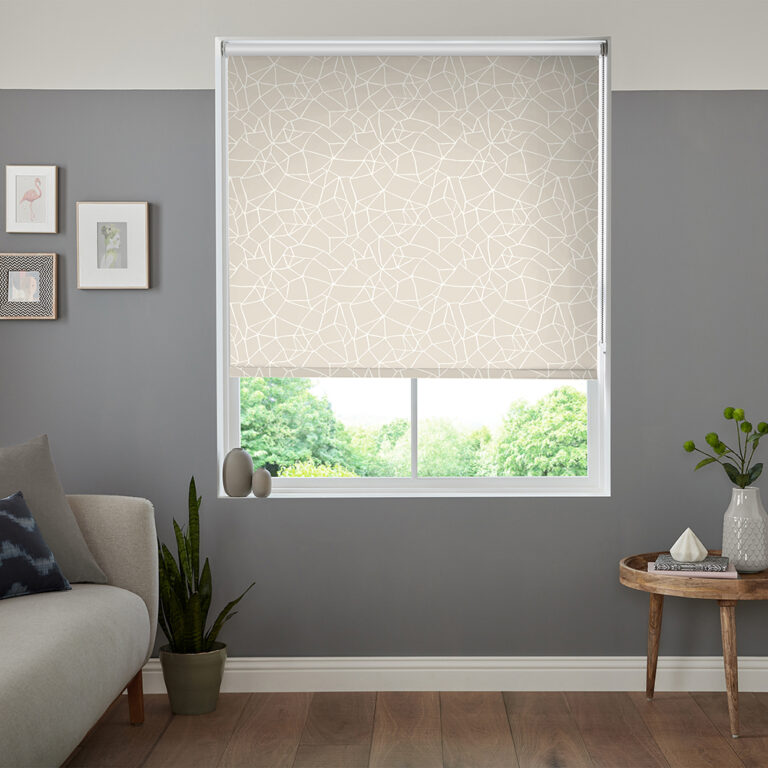
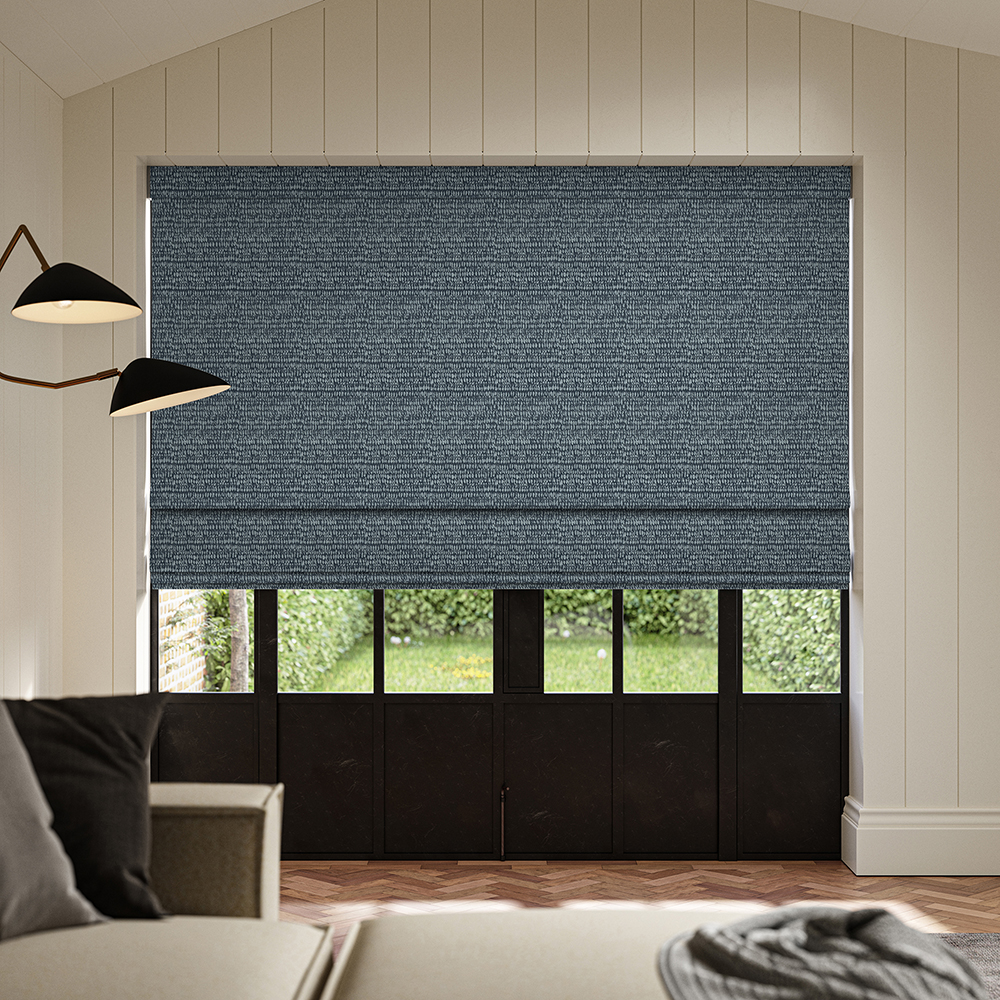
A roman blind is a panel of fabric that folds up into soft horizontal pleats as you raise it. A roller blind is a flat piece of fabric that wraps around a tube at the top of the window.
Nearly everything else follows from that. A roman keeps a stack of fabric at the top of the window even when it’s fully up. A roller takes up very little room and gives you back almost all the glass.
Roman blinds are usually lined, which is why they feel closer to a curtain. You can choose polycotton or satin (both dim-out), blackout, or a bonded thermal lining. Roller blinds are a single layer of fabric, so they look cleaner and more architectural.
Roman blinds vs roller blinds side by side
| Roman blinds | Roller blinds | |
|---|---|---|
| Look | Soft folds, tailored, like a curtain | Flat, minimal, modern |
| When raised | Fabric stack sits at the top of the window | Rolls into a slim tube |
| Light control | Dim-out, blackout or thermal lining | Light filtering or blackout fabrics |
| Patterns | Prints show flat and folded | Prints show flat |
| Wide windows | Over 1300mm wide, made with discreet pattern-matched seams | One single panel, no joins |
| Best rooms | Living rooms, bedrooms, dining rooms | Kitchens, bathrooms, home offices, kids’ rooms |
| Steam and splashes | Less suited | Waterproof fabrics available |
| Cleaning | Dust gently; professional dry clean | Wipe with a dry, lint-free cloth |
| With curtains | A classic layered look | Slim enough to hide behind curtains |
Which looks better in a living room?
For most living rooms, a roman blind looks more finished. The folds add depth, and a patterned fabric shows off properly: flat when the blind is down, gathered into soft pleats when it’s up. If the room already has curtains, a roman in a matching or plain fabric can sit behind them in the recess.
You also get a choice of how it folds. A stacked roman pulls up into neat, flat folds. A waterfall roman keeps soft folds cascading down the front even when lowered, which suits a more relaxed room.
A roller still has a place in the living room, mainly where you want the window to feel bigger or the style is pared back. Bay windows are the obvious case. A separate roller on each pane keeps the bay neat and stops it feeling crowded with fabric.
Look through our roman blinds to see how prints from designers such as Orla Kiely, Cath Kidston and Sophie Allport look in pleated form.
Which is better for a kitchen or bathroom?
A roller, in nearly every case. Most of our waterproof blinds are rollers, made to cope with steam and splashes, and a flat fabric is much easier to keep clean than folds that catch grease and dust.
A roman can still work in a kitchen if the window is well away from the hob and sink, say a side window over a breakfast table. Put one directly above the sink and it will get splashed. Roman blinds need professional dry cleaning, so that gets old quickly.
Which blocks more light: a roman or roller blackout blind?
Both block light well with a blackout fabric or lining. The difference is at the edges, and it has more to do with how the blind is fitted than its style. A blind fitted inside the recess is made about 10mm narrower than the recess so it can move freely, which leaves a thin line of light down each side. That’s true of romans and rollers alike.
If you need a properly dark room, fit the blind outside the recess (an exact fit) with at least 100mm of overlap on each side, or pair it with lined curtains. Either will do more than switching from roller to roman. Our blackout blinds include both styles.
Do roman blinds take up more space?
Yes. When a roman is fully raised, the folded stack sits at the top of the window and covers part of the glass. On a tall window you’ll lose a noticeable strip at the top.
That matters on small or short windows, and in rooms already short on daylight, like a north-facing bedroom. A roller tucks away into a narrow roll and gives you almost the full window back.
If you love the look of a roman but don’t want to lose light, fit it outside the recess, a little above the window frame. The stack then sits mostly on the wall rather than across the glass.
Are roller blinds easier to live with?
Day to day, yes. A roller goes up and down quickly, there are no folds to straighten, and cleaning is a wipe with a dry cloth. In a child’s bedroom or a busy family kitchen, that counts for a lot. Whichever you choose for a child’s room, our blinds come with breakaway clips on the cords and a child-safety P-clip for looped chains. Keep cords out of reach and move cots and beds away from them.
Roman blinds ask a little more of you. The folds look best when the blind is raised evenly, and cleaning means dusting and the occasional trip to a dry cleaner. In return you get a softer, more furnished room.
For wide or hard-to-reach windows, such as a tall stairwell window or one over a deep worktop, look at motorised blinds. Roman blinds can be motorised and run by remote, voice control or an app. And if you can’t or don’t want to drill, both styles come as no-drill blinds that fit inside the window recess, as long as the frame is solid.
Can I use a roman blind with curtains?
Yes, and it works in almost any room. The roman sits inside the window recess and the curtains hang on a pole or track outside it. Draw the curtains at night for warmth and privacy, and use the blind during the day to soften the light.
Roller blinds pair well with curtains too. Because a roller is so slim it almost disappears behind them, which is handy if you want a bold curtain fabric to be the focus.
If you’re choosing curtains at the same time, our pinch pleat curtains guide explains the main headings and how much fabric each one uses.
How do I decide between roman blinds and roller blinds for my window?
Start with the room and what the blind has to do. These questions usually settle it:
- Will it get wet or greasy? Choose a roller.
- Is the window small, or the room short on daylight? A roller keeps more glass clear.
- Do you want the blind to be the main soft furnishing, with no curtains? A roman does that.
- Is it a bedroom where darkness matters? Either works in blackout, so choose on looks and fit.
- Is the window wide and is the fabric a bold print? A roller is one panel with no joins, while a wide roman will have pattern-matched seams.
- Do you want the same print on the blind, curtains and cushions? Romans are easier to coordinate.
Once you’ve chosen, our blind measuring guide explains recess and exact fit measuring for both styles.
Quick answers
Are roman blinds better than roller blinds?
Neither is better overall. Romans suit living rooms and bedrooms where you want a soft, tailored look. Rollers suit kitchens, bathrooms and small windows where space and easy cleaning matter.
Do roman blinds let in less light than roller blinds?
When raised, yes, because the folded fabric sits across the top of the window. When lowered, how much light gets through depends on the fabric or lining and the way the blind is fitted, not the style.
Can you get blackout roman blinds?
Yes. Roman blinds can be made with a blackout lining, and roller blinds come in blackout fabrics.
Which is easier to clean?
Roller blinds. A wipe with a dry, lint-free cloth is usually enough, while roman blinds need professional dry cleaning.
Can I see the fabrics before ordering?
Yes. Order up to five free samples, or come and see us at our showroom on Green Lane Road, Leicester.
Find your blind
Not sure yet? Order up to five free fabric samples. They arrive through your letterbox in 2 to 3 working days and you don’t need to send them back. Seeing a fabric in your own window light beats any photo, and because made to measure blinds can’t be returned unless they’re faulty, it’s worth the short wait. When you’re ready, browse roman blinds or roller blinds. Made to measure blinds are usually delivered within 10 to 14 working days, free to mainland UK on orders over £150. If you’d rather talk it through, visit our Leicester showroom (Monday to Friday 9am to 5.30pm, Saturday 11am to 5.30pm) or call 0116 251 1470.